
Exploring the Advantages and Disadvantages of Plastic in Construction
Plastic has become an integral part of modern life, and the construction industry is no exception. From plumbing and insulation to innovative formwork systems, plastic materials are used in a variety of construction applications. However, like any material, plastic has both advantages and disadvantages when used in construction projects.
By the end, you'll know where plastic makes sense on your projects and where it doesn't.
The Growing Use of Plastic in Construction
Plastic materials have been used in construction for decades, but their role has expanded significantly in recent years. Today, plastic is used in everything from formwork systems to pipes, insulation, flooring, and even structural components. Its versatility, durability, and affordability make it an attractive option for a wide range of construction applications.
However, the increased use of plastic in construction also raises questions about its environmental impact, long-term durability, and suitability for certain types of projects. Let’s take a closer look at the advantages and disadvantages of plastic in construction.
Advantages of Plastic in Construction
Durability and Resistance
Unlike wood or steel, plastic does not rot or rust when exposed to moisture.
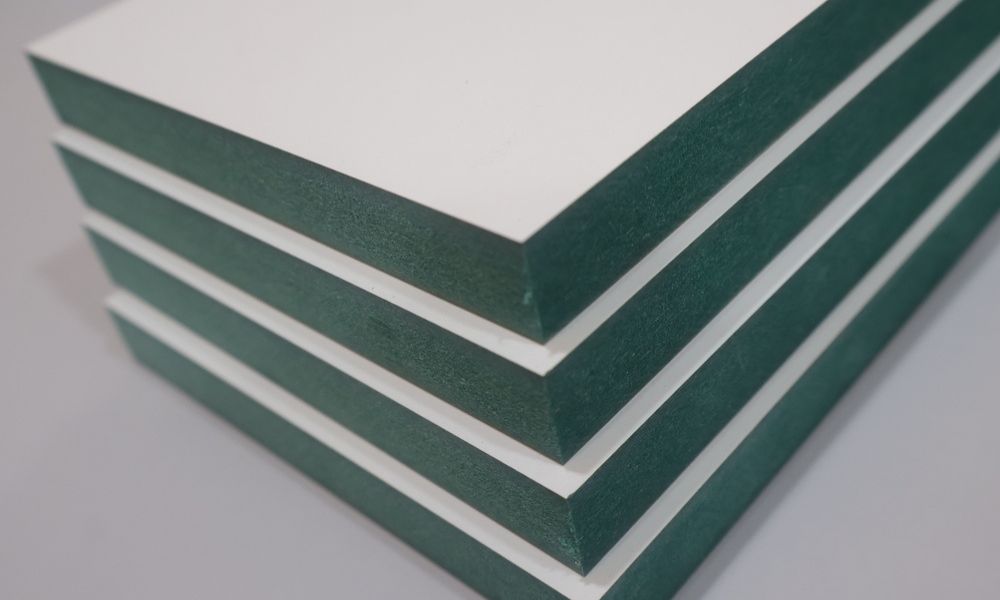
For example, plastic formwork sheets are waterproof, so they don't swell or delaminate in wet conditions.
Lightweight and Easy to Handle
Many plastic products are much lighter than steel or concrete equivalents, which makes them easier to transport, handle and install.
For example, plastic formwork panels are much easier to move than steel forms, which often need lifting equipment.
Cost-Effective
Plastic can be more economical than traditional materials once you count durability and reuse. For instance, plastic formwork sheets are designed for 50–100+ uses, whereas plywood formwork often needs replacing after just a few, which can mean a saving of up to 70–80% on replacement costs.
The long lifespan of plastic products also means contractors spend less on replacement over time.
Versatility
Plastic is an incredibly versatile material, capable of being moulded into various shapes and sizes. This versatility makes it suitable for a wide range of applications, from flexible pipes to rigid formwork panels. Plastic can be used for insulation, electrical conduit, flooring, roofing, and even structural components in certain types of buildings.
The versatility of plastic makes it a valuable asset for contractors who need adaptable solutions that can be customised to meet specific project needs. Whether it’s for plumbing, structural reinforcement, or insulation, plastic offers a range of possibilities that traditional materials can’t always provide.
Recycled Content
Some plastic construction products, such as decking, use recycled content. Check the supplier's documentation for any specific product.
Reusable products such as plastic formwork also mean fewer worn materials going to the skip.
Disadvantages of Plastic in Construction
Environmental Concerns
One of the most significant drawbacks of plastic is its environmental impact. While recycled plastics are available, the production of new plastic materials still relies heavily on fossil fuels, contributing to greenhouse gas emissions and environmental degradation. Additionally, plastic waste that is not properly managed can end up in landfills or the ocean, where it takes centuries to decompose.
However, many manufacturers are working to reduce the environmental impact of plastic by using recycled materials and improving recycling infrastructure. By choosing recycled plastic products, contractors can help mitigate some of the environmental concerns associated with plastic.
Limited Strength Compared to Traditional Materials
While plastic is durable and resistant to many environmental factors, it does not have the same strength as materials like steel or concrete. This makes it unsuitable for certain structural applications that require high load-bearing capacity.
For example, plastic formwork is excellent for shaping concrete and can be reused multiple times, but it may not be suitable for heavy-duty structural applications that require the strength and rigidity of steel formwork. Contractors must carefully evaluate whether plastic is appropriate for the specific demands of their project.
Susceptibility to UV Degradation
Certain types of plastic can degrade when exposed to prolonged sunlight (UV radiation). This can cause the material to become brittle and lose its structural integrity over time. For outdoor applications, it’s important to use UV-stabilised plastic materials to prevent degradation.
While some plastic products are treated to resist UV damage, this can add to the cost and complexity of the project. Contractors should be aware of the potential for UV degradation when using plastic materials in outdoor applications and select the appropriate products accordingly.
Recycling Challenges
Some plastics, such as PVC, need specialised recycling streams.
Plastics reinforced with other materials, such as glass fibre, can also be harder to recycle.
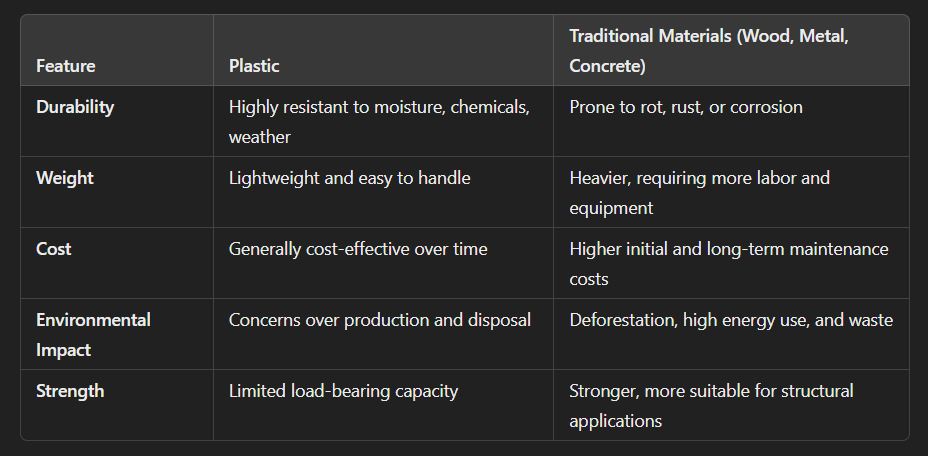
Plastic vs. Traditional Materials: A Comparison
When considering the use of plastic in construction, it’s helpful to compare it with traditional materials like wood, metal, and concrete. Here’s how plastic stacks up against these materials:
Applications of Plastic in Construction
Plastic is used in a wide range of construction applications, including:
Plumbing
Plastic pipes (such as PVC and polyethylene) are commonly used for water and wastewater systems because of their resistance to corrosion and chemicals.
Insulation
Plastic-based insulation materials, like polystyrene and polyurethane foam, provide excellent thermal insulation and moisture resistance.
Flooring and Decking
Recycled plastic is often used for outdoor decking and flooring due to its resistance to moisture, UV degradation, and wear.
Roofing
Plastic roofing materials, such as polycarbonate and PVC, offer lightweight, weather-resistant solutions for industrial and commercial buildings.
Conclusion: Is Plastic Right for Your Construction Project?
Plastic is a versatile material with real advantages for modern construction. Its durability, cost-effectiveness and versatility make it well suited to many applications, including formwork, plumbing and insulation.
For formwork in particular, reusable plastic sheets (50–100+ uses, waterproof, no swelling) can save up to 70–80% on replacement costs compared with plywood. Get a Quote to price sheets for your next project.