

Plastic Formwork Advantages in Modern Construction
Plastic formwork sheets can save up to 70–80% on replacement costs compared with plywood, because each sheet is designed for 50–100+ uses. Contractors get a flat, smooth concrete finish that can reduce patching and rendering on residential, commercial and civil projects. The sheets are waterproof, so they don't swell, and fewer replacements mean less waste on Australian sites.
Key Takeaways
Plastic formwork gives a smooth, flat concrete surface.
Waterproof sheets that don't swell last 50–100+ uses, far longer than plywood.
Fewer replacements mean lower costs and less waste.
Tight joints between sheets help reduce grout leakage.
Why Switch from Plywood Formwork?
Plywood formwork fails long before plastic alternatives do. Standard plywood sheets last only 3–8 uses before degrading. Plastic formwork sheets are designed for 50–100+ uses, which can mean a saving of up to 70–80% on replacement costs. That durability changes the economics of concrete forming.
What Makes Plastic Formwork Last Longer Than Plywood?
Moisture destroys plywood. Water soaks into the veneers, causing delamination, warping and surface deterioration after just a few pours. Plastic formwork is waterproof, so concrete slurry, rain and wash-down don't damage it, and it doesn't swell or rot. Builders who switch avoid the cycle of constant plywood replacement between projects.
How Does the Concrete Finish Compare?
Plastic formwork gives a more consistent concrete finish than worn plywood. The non-porous surface creates a smooth face without timber grain transfer, and release stays consistent pour after pour. That can reduce patching and rendering on many surfaces.
Fewer replacements mean less waste sent to landfill. Plastic sheets can be cleaned and immediately reused on the next slab, wall, or column without sorting through damaged panels. For builders running several projects at once, that means less time waiting on replacement plywood.
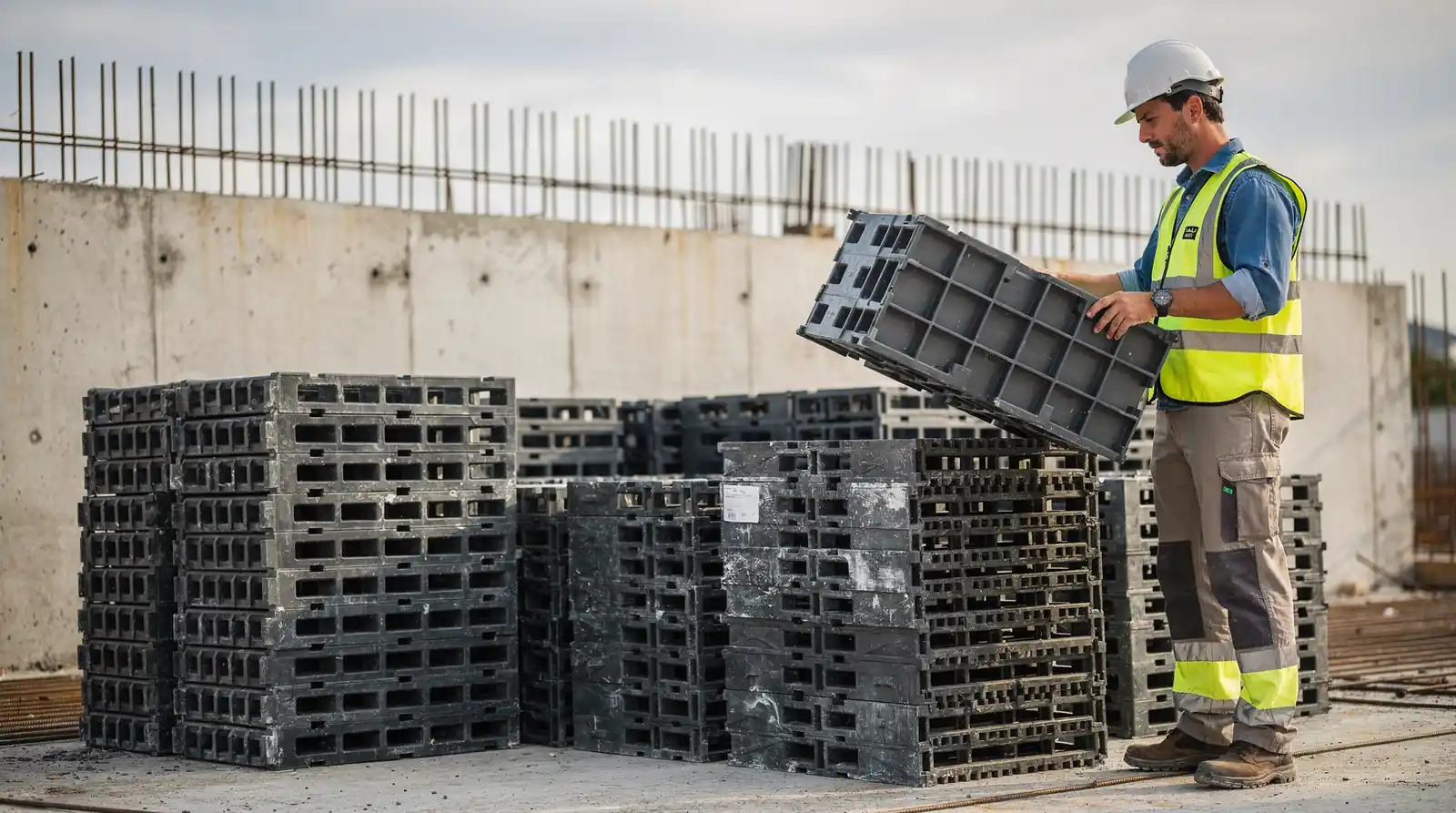
What Makes Plastic Formwork Cost-Effective?
Switching to reusable plastic formwork sheets can save up to 70–80% on replacement costs compared with traditional plywood. Most plywood sheets last only 3–8 uses, while plastic sheets are designed for 50–100+. That difference in lifespan drives the main cost advantage: fewer replacements mean lower total material spend across a project.
How Does Reusability Lower Long-Term Costs?
Plastic formwork is reusable, which lowers long-term costs and means less waste. Each plastic sheet can replace many plywood sheets over its service life, so the higher upfront price is recovered as the reuse count climbs.
Does Faster Installation Affect Project Budgets?
Plastic formwork is much lighter than steel, can be cut, drilled and nailed like plywood, and releases cleanly, which helps setup and stripping. It is cost-effective over time and particularly suitable for projects where turnaround matters.
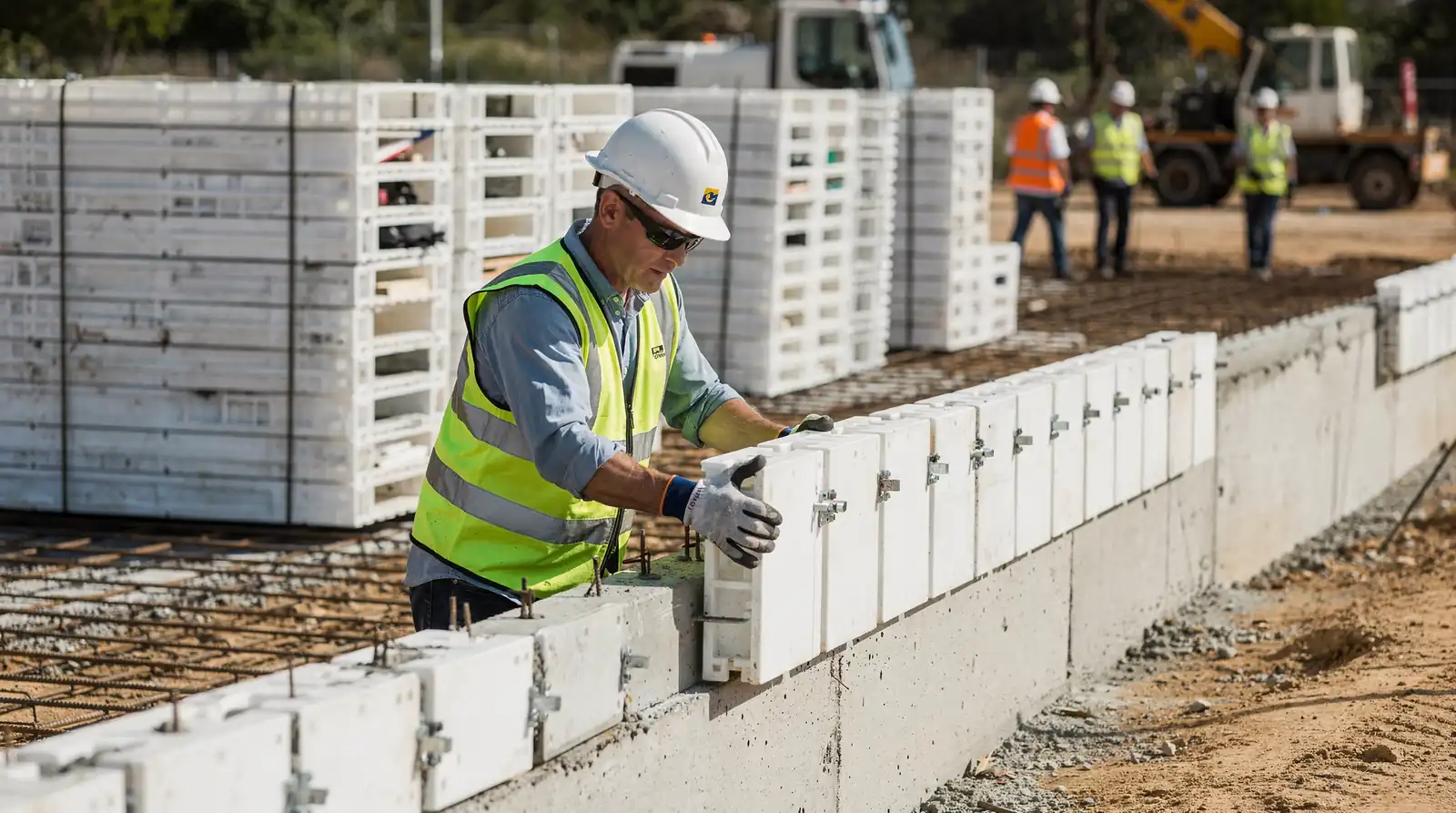
How Does Plastic Formwork Improve Site Efficiency?
Plastic formwork improves site efficiency by combining easy workability with a finish that can reduce secondary work.
What Makes Plastic Formwork Faster to Install?
Crews can cut, drill and nail plastic formwork sheets on site with standard tools, so the sheets can be shaped to suit the job without waiting for prefabricated panels.
How Does the Finish Reduce Labour Time?
Sheets butt together tightly and flat, giving a smooth concrete surface after stripping. That can reduce or avoid rendering and patching, saving labour on residential and commercial work.
Additional time-saving features include:
Easy stripping: concrete releases cleanly from the sheet surface (follow your specification on release agents)
Quick cleaning: residue usually washes off with water and a brush
Durable material: waterproof engineered-plastic sheets that don't swell, designed for 50–100+ uses
These advantages compound with every reuse. A sheet that lasts 50–100+ uses means crews handle fewer replacements and carry less material to site.
FAQ
How many times can plastic formwork be reused?
Plastic formwork sheets are designed for 50–100+ uses, compared with plywood's 3–8. That durability drives savings of up to 70–80% on replacement costs.
Does plastic formwork perform well in wet conditions?
Yes. Plastic formwork is waterproof, so concrete slurry, rain and wash-down don't damage it, and it doesn't swell or rot.
Why choose plastic formwork over plywood for concrete finishes?
Plastic formwork's non-porous surface produces a smooth, consistent finish without timber grain transfer, which can reduce patching and rendering.
Conclusion
Plastic formwork sheets combine durability (50–100+ uses), a waterproof surface that doesn't swell and a smooth finish, with up to 70–80% saving on replacement costs compared with plywood. Running system formwork? See our replacement formwork facing sheets. Or Get a Quote for your next project.